
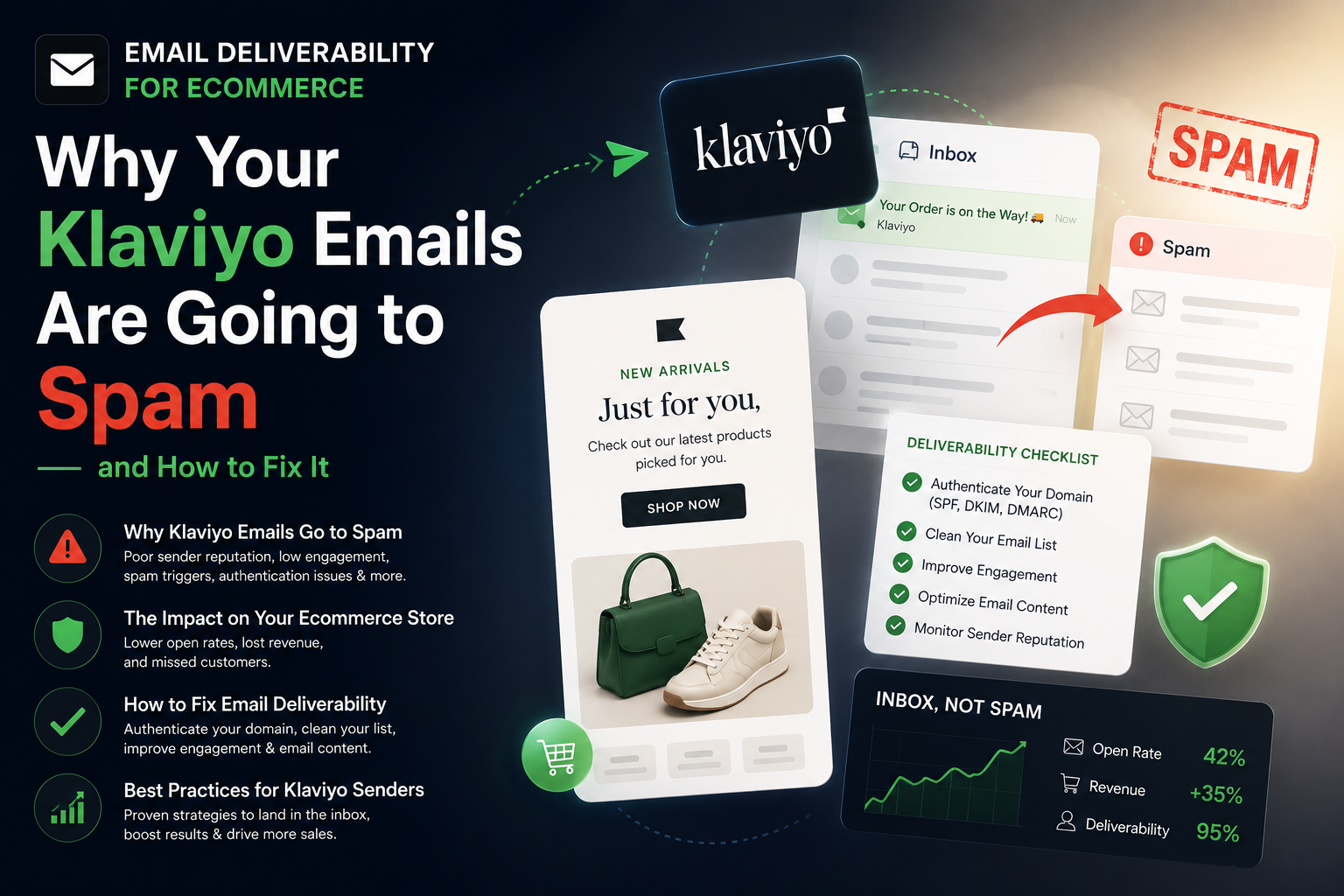
For most ecommerce businesses, email is the highest-ROI marketing channel they have. Abandoned cart sequences, post-purchase flows, win-back campaigns, promotional blasts — all of it depends on one thing: the emails actually reaching the inbox. When deliverability breaks down in an ecommerce context, the revenue impact shows up almost immediately in the numbers. Recovery rates on abandoned carts drop. Post-purchase LTV suffers. Reactivation campaigns stop working. And the problem is almost always invisible until it has already caused significant damage.
This guide covers the specific deliverability challenges that ecommerce businesses face, why platforms like Klaviyo can give you a false sense of security, and exactly what to do to protect and improve your inbox placement.
Ecommerce senders face a unique combination of challenges. They often send very high volumes across multiple stream types — transactional emails like order confirmations and shipping notifications, marketing flows like welcome sequences and abandoned cart reminders, and promotional campaigns for sales and product launches. Each of these streams has different engagement profiles, different audience segments, and different implications for your sender reputation.
Transactional emails need to reach the inbox reliably every time — a missed order confirmation or shipping update creates a customer service problem immediately. Marketing emails need to reach the inbox to drive revenue. And promotional campaigns, especially during peak periods like Black Friday, often involve sudden large volume spikes that can damage deliverability if not managed carefully. Our full guide to transactional and sales email deliverability covers how to manage these different streams correctly.
Klaviyo is the email platform of choice for the majority of Shopify-based ecommerce businesses, and it is genuinely a powerful platform. But there is a specific misconception that trips up many ecommerce operators: because Klaviyo has strong built-in deliverability features, some brands assume that using Klaviyo means their deliverability is automatically handled. It is not.
Klaviyo can tell you your delivery rate. It cannot guarantee your inbox placement rate. The platform provides tools for list management, suppression, and authentication setup, but whether your emails reach the inbox depends on your domain reputation, your list health, your sending patterns, and your engagement metrics — all of which are in your control, not Klaviyo's. In 2025, Klaviyo added a dedicated Deliverability Hub with real-time reputation scoring, which is a useful monitoring tool but is not a substitute for actually fixing the underlying factors that drive deliverability.
Sending to a large unengaged list is the most common ecommerce deliverability problem. Many ecommerce brands aggressively build their subscriber lists through pop-ups, promotions, and lead magnets, then continue emailing everyone indefinitely regardless of engagement. As months pass, the unengaged portion of the list grows, engagement rates fall, and sender reputation degrades — often slowly enough that the brand does not notice until the damage is already significant.
High-volume promotional spikes during peak shopping seasons are the second major factor. Brands that send at moderate volume most of the year and then suddenly blast their entire list four times a week during Black Friday week create exactly the kind of sudden volume spike that spam filters are designed to catch. The result is degraded deliverability that can persist for weeks after the campaign ends. Careful IP and domain warming before peak periods is the right preventive approach.
Mixing transactional and marketing email on the same sending infrastructure is another common issue. If your order confirmations and your promotional campaigns share the same sending domain and IP, high complaint rates from marketing campaigns can damage the deliverability of your transactional emails — which is the exact opposite of what you want. Separating these streams onto different subdomains or sending IPs is a standard best practice for ecommerce brands at scale.
Segment aggressively and suppress unengaged contacts. Any subscriber who has not opened or clicked in 90 days should be moved out of your regular sending segments. Before fully suppressing them, run a re-engagement campaign. Those who do not respond to re-engagement should be removed from active sends. This single action, done consistently, has a larger positive impact on ecommerce deliverability than almost anything else.
Separate your sending streams. Use a dedicated subdomain for transactional emails — something like notifications.yourstore.com — and keep your marketing and promotional sends on a separate subdomain. This way, if a promotional campaign generates elevated complaint rates, it cannot contaminate the inbox placement of your order confirmations and shipping updates.
Warm up before peak periods. Do not wait until Black Friday to scale your send volume. Begin gradually increasing your email frequency four to six weeks before peak season so your sending infrastructure and reputation are ready to handle the volume. Our email infrastructure services include seasonal ramp-up planning for exactly this purpose.
Monitor constantly. Your deliverability metrics can shift significantly in a short period during high-traffic seasons. Set up Google Postmaster Tools, check your domain reputation weekly, and run inbox placement tests before major campaigns.
Every recommendation above assumes your SPF, DKIM, and DMARC authentication is correctly configured. If it is not, none of the other strategies will be fully effective. Many ecommerce brands add multiple email-sending tools over time — a transactional email provider, an SMS platform that also handles email, a marketing automation layer — without setting up DKIM authentication for each new tool. The result is a patchwork authentication setup with gaps that hurt deliverability across the board. Our email deliverability audit checks your full authentication setup across all sending streams.
The ecommerce brands with the best email deliverability are not necessarily the ones with the biggest lists. They are the ones who send less but send smarter — to engaged subscribers who actually want to hear from them.
If your ecommerce email program is underperforming and you are not sure why, Formula Inbox's team can identify exactly what is holding back your inbox placement. Start with a complimentary inbox placement test to get a baseline, or talk to a deliverability expert to discuss a comprehensive approach to your email program's technical health.
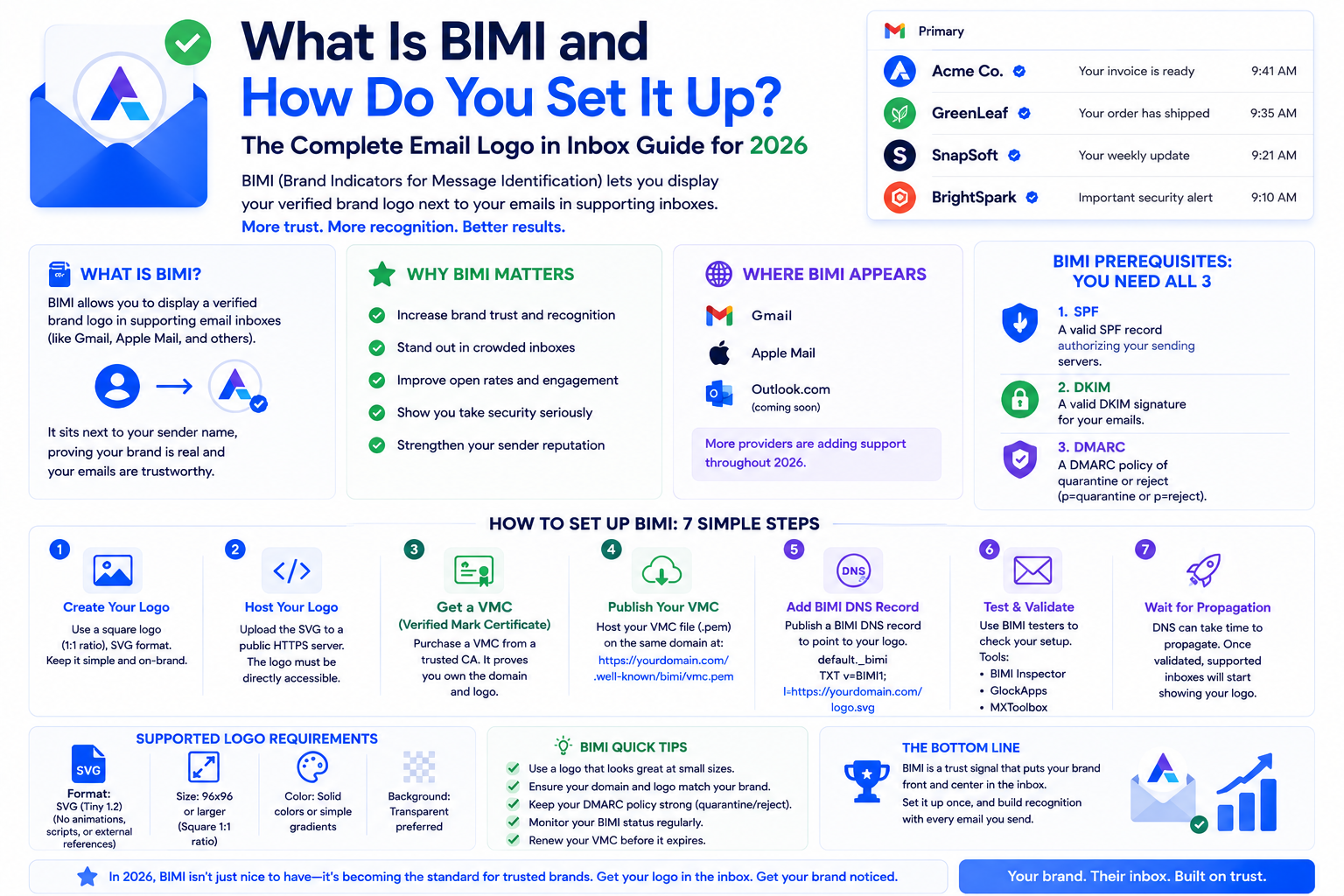
BIMI displays your brand logo next to your emails in Gmail and Yahoo — improving recognition and trust. This complete guide explains what BIMI is, how to set it

Email deliverability and email marketing are not the same thing. Understanding the difference is the first step to fixing inbox placement problems that no amoun
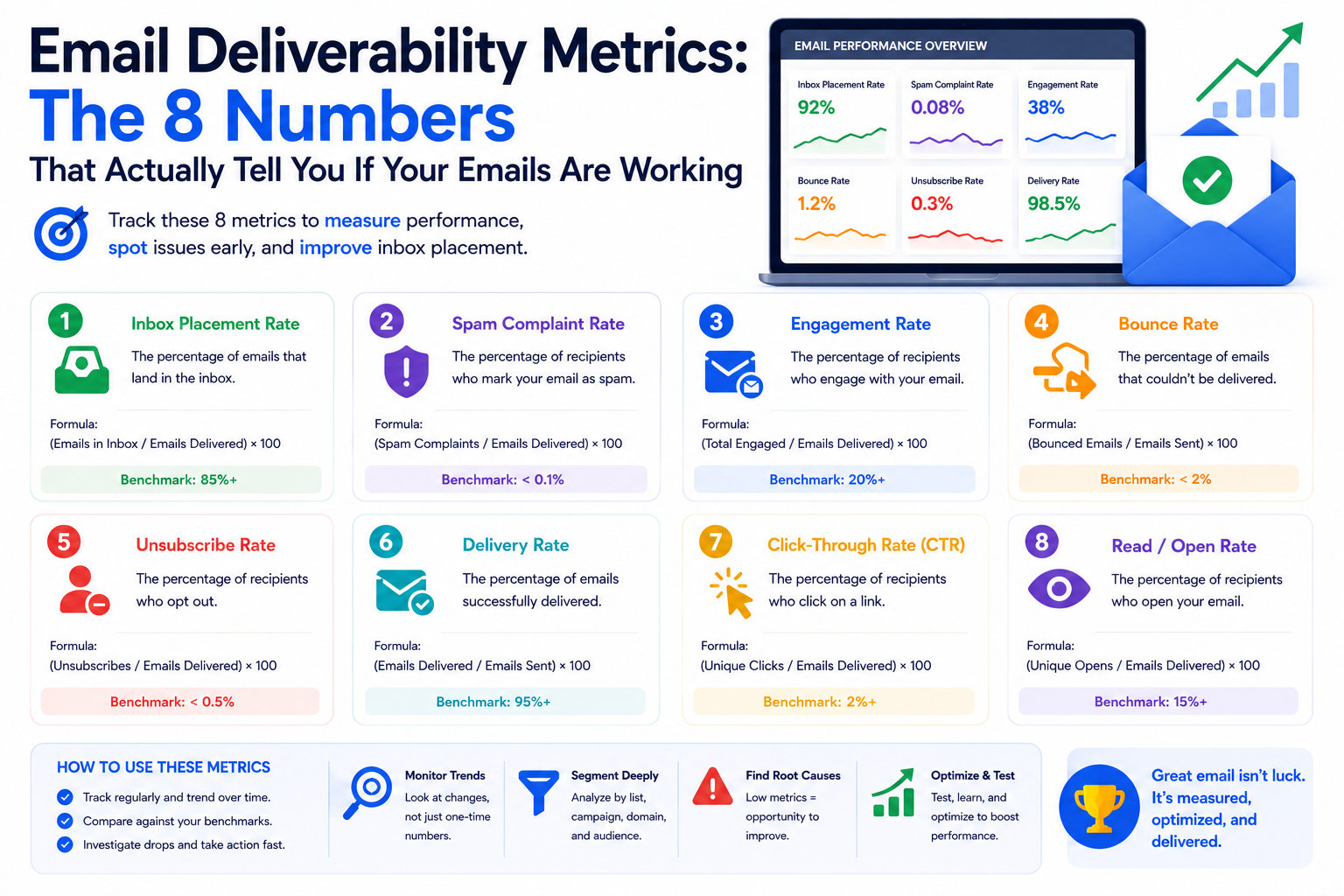
Most email marketers track the wrong metrics. These are the 8 deliverability numbers that actually reveal whether your emails are reaching the inbox — and what
Our highly experienced email deliverability managers consistently help clients achieve inbox placement rates (IPR) of more than 90% by uncovering and resolving the issues that keep messages from their intended recipients. Are you ready to do the same?