
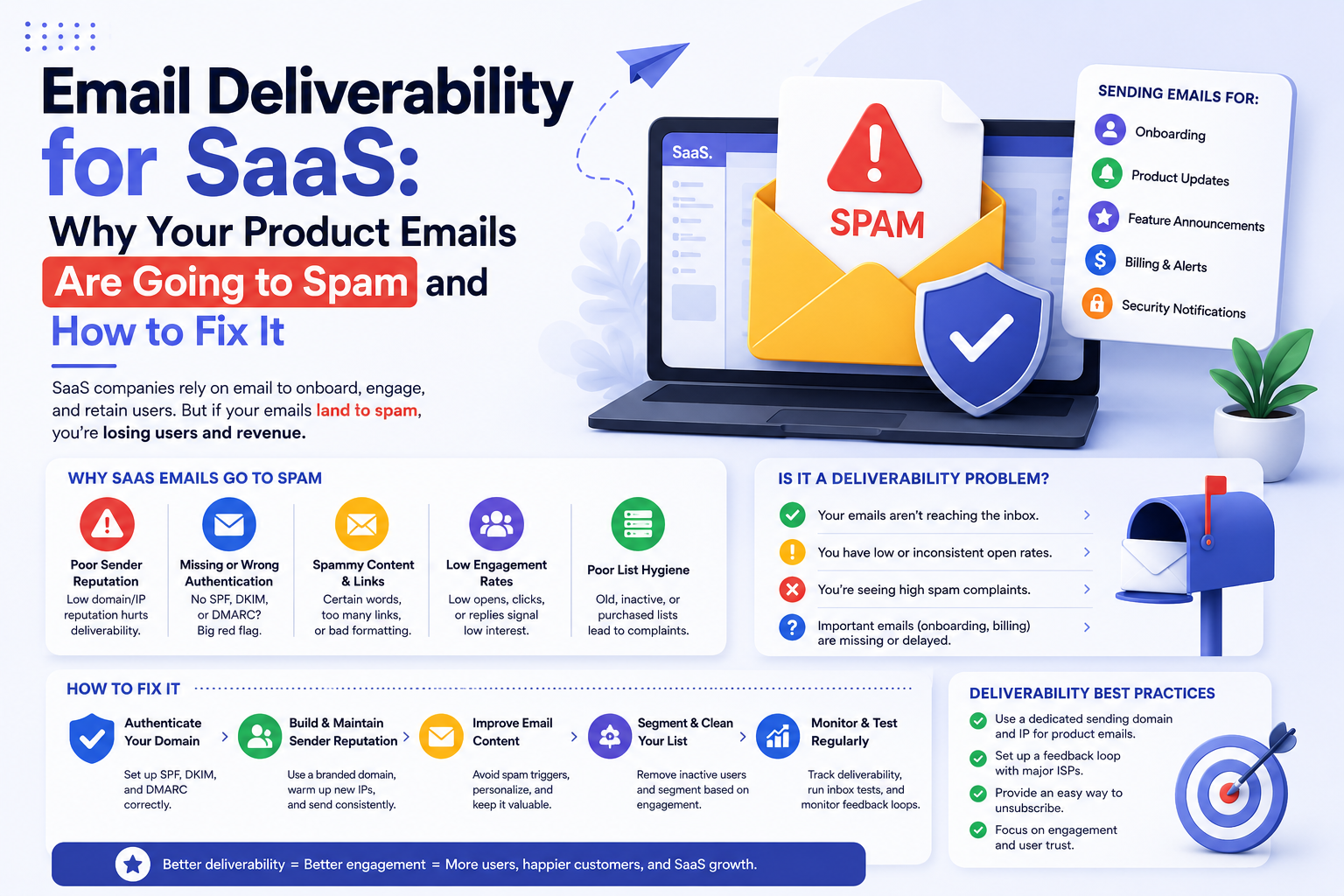
For a SaaS business, email is not just a marketing channel. It is product infrastructure. Welcome emails trigger onboarding. Password resets enable account access. Usage notifications drive feature adoption. Renewal reminders protect revenue. When any of these land in spam, the downstream effects go far beyond open rate statistics — they affect trial-to-paid conversion, retention, and product engagement in ways that are easy to misattribute to product problems when the real cause is a deliverability failure.
SaaS companies face a specific set of email deliverability challenges that differ from ecommerce and B2B marketing contexts. This guide covers the most common ones and exactly how to address them.
Most SaaS companies end up with a fragmented email-sending architecture that creates deliverability vulnerabilities they are not aware of. A typical pattern: product engineers set up transactional email through AWS SES, SendGrid, or Postmark early in the company's life, configured quickly to get signups working. The marketing team later adds a separate marketing automation platform for campaigns and nurture sequences. The sales team adds yet another tool for cold outreach. The result is three or four different sending platforms, often using different sending domains or subdomains, with inconsistent authentication setups across all of them.
Each of these platforms needs its own DKIM keys added to your DNS. Each sending domain needs proper SPF coverage. If any of them are missing authentication, they are generating deliverability risk. An email infrastructure audit maps out your full sending environment and identifies every authentication gap.
The welcome email is one of the most important emails a SaaS company sends. It sets expectations, triggers onboarding, and starts the relationship that will determine whether a trial user converts to a paying customer. If your welcome email goes to spam for even 20% of new signups, you are losing a significant portion of those trials before onboarding even begins — and you are likely attributing those losses to product quality rather than deliverability.
Welcome emails should be sent from a dedicated transactional email domain with its own authentication setup, completely isolated from your marketing and cold email sends. They should be plain text or very close to it — HTML-heavy welcome emails with images and multiple links score higher on spam filters. And they should be triggered immediately at signup to hit the inbox when the user's intent and attention are at their peak.
Most early-stage SaaS companies use shared IP pools through their transactional email provider. This is perfectly reasonable when you are sending low volumes. But shared IPs mean your deliverability is partially dependent on the behavior of other senders on the same IP. If another company using the same shared pool has a spam complaint spike or gets blacklisted, your emails are affected even if you have done everything right.
As your email volume grows — generally above 10,000 to 20,000 sends per month — moving to a dedicated IP that you control and warm specifically for your domain is worth the additional cost. Our email infrastructure services include dedicated IP provisioning and warm-up planning tailored to your specific sending volumes and patterns.
SaaS products that allow users to invite others, share links via email, or send notifications to contacts they enter manually face a specific risk that most do not plan for: user-generated email content and user-supplied email addresses can create deliverability problems at scale. If your product sends emails to addresses that users enter, and some of those addresses are invalid, do not exist, or are spam traps, the resulting bounces and trap hits attach to your sending reputation — even though you did nothing wrong.
Implement email validation for any user-entered address that triggers outgoing email from your platform. Validate at entry, not at send time. Remove hard bounces immediately and implement rate limiting on invitation sends to prevent the product from being used as a spam delivery mechanism.
Product engineers and marketing teams often have entirely separate views of email performance. Engineers know whether emails were delivered. Marketers know whether campaigns performed. Neither group typically has visibility into whether product emails are reaching inboxes or landing in spam. This gap is where deliverability problems hide for the longest.
Set up Google Postmaster Tools for every domain you use for SaaS email sending. Run periodic inbox placement tests on your most important email types: welcome email, password reset, key product notifications. Monitor your domain reputation dashboards at least weekly. Our ongoing deliverability monitoring service automates this monitoring layer so problems are caught immediately rather than discovered through customer complaints.
In SaaS, a welcome email that goes to spam is not just a deliverability problem. It is a trial conversion problem. It is a retention problem. It is a revenue problem. The cost of getting this wrong compounds every day it goes unfixed.
If your SaaS product emails are not reliably reaching the inbox, Formula Inbox's team can map your full email architecture, identify every vulnerability, and implement the fixes. Start with a complimentary inbox placement test to see exactly where your most important product emails are landing right now.
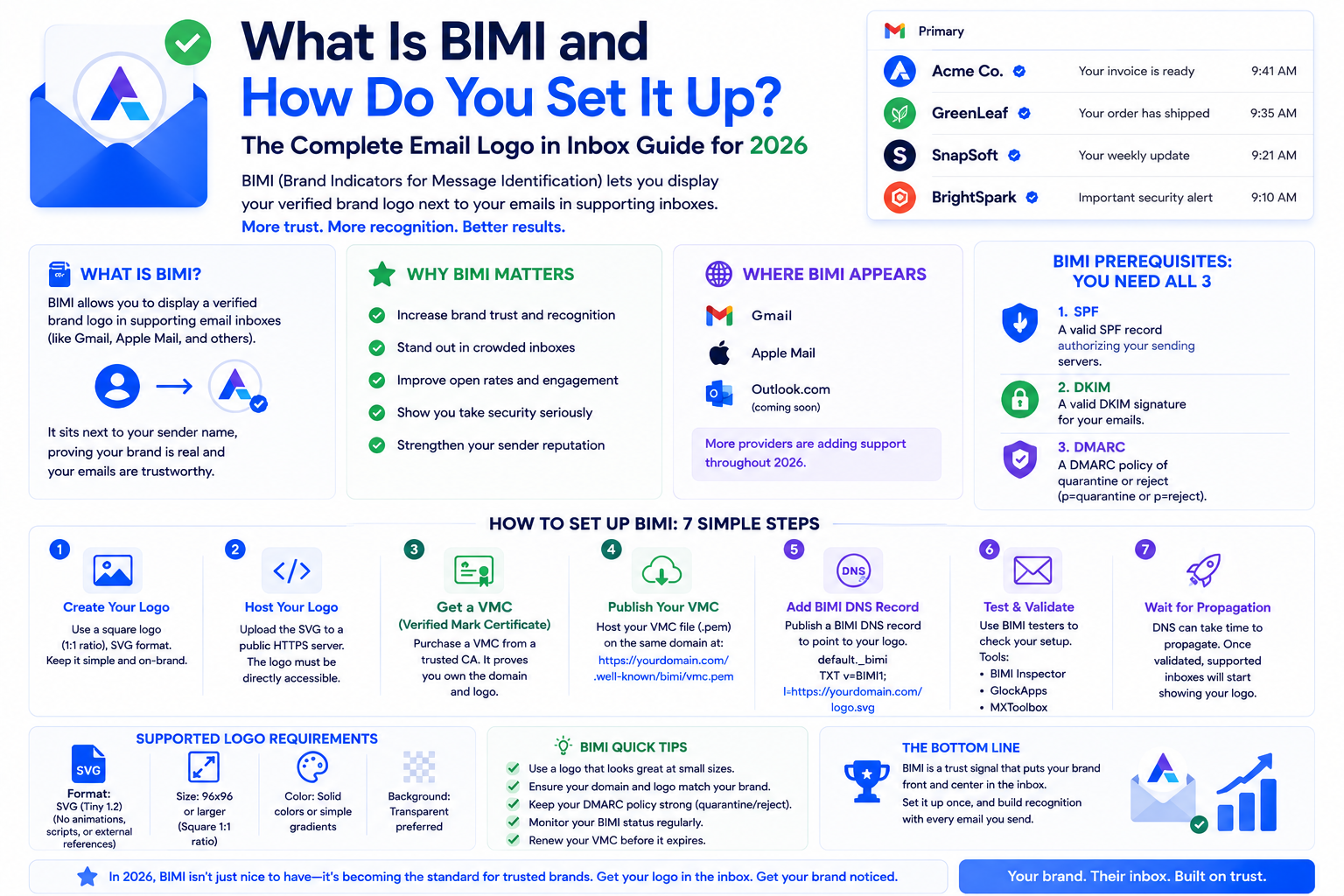
BIMI displays your brand logo next to your emails in Gmail and Yahoo — improving recognition and trust. This complete guide explains what BIMI is, how to set it

Email deliverability and email marketing are not the same thing. Understanding the difference is the first step to fixing inbox placement problems that no amoun
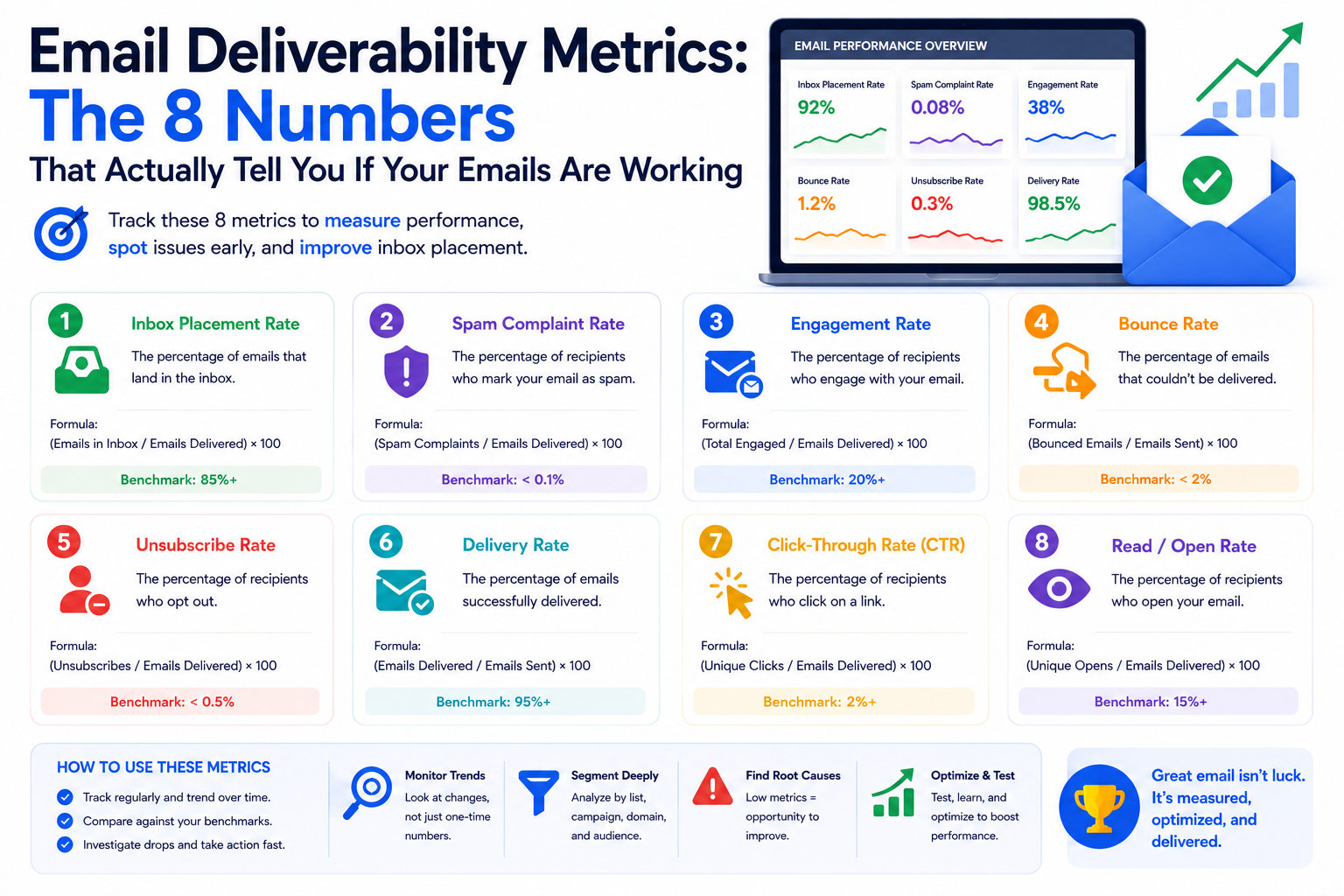
Most email marketers track the wrong metrics. These are the 8 deliverability numbers that actually reveal whether your emails are reaching the inbox — and what
Our highly experienced email deliverability managers consistently help clients achieve inbox placement rates (IPR) of more than 90% by uncovering and resolving the issues that keep messages from their intended recipients. Are you ready to do the same?