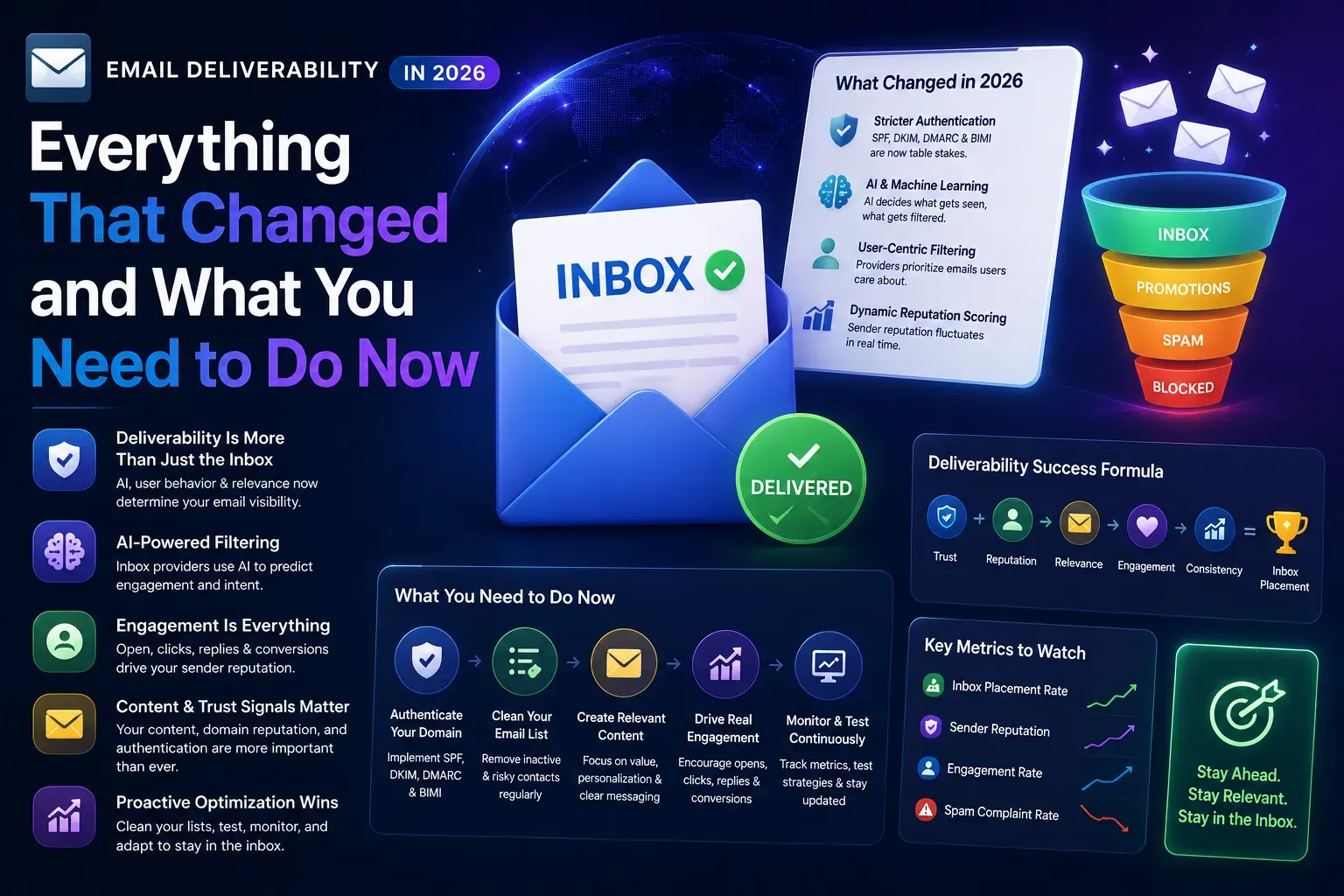
If you set up your email program two years ago and have not revisited your deliverability fundamentals since, the rules have changed significantly. The 2024 Gmail and Yahoo bulk sender requirements were just the beginning. Throughout 2025 and into 2026, every major inbox provider made substantial changes to how they filter, prioritize, and deliver email. Some of these changes were announced. Many were not. All of them are affecting your inbox placement right now whether you are aware of them or not.
This is not a scare piece. Every one of these changes rewards senders who do things right and punishes senders who cut corners. If you have been following good deliverability practices, 2026 is actually working in your favor. If you have been coasting on outdated setups, this is the year those shortcuts are catching up with you. Here is everything that changed and what you should do about it.
Gmail's AI-Powered Inbox Is Now Fully Active
Google's Gemini AI is now integrated into Gmail at scale, and it has added a new filtering layer on top of traditional spam detection. Gemini reads your email content, generates summaries for users, and makes prioritization decisions based on its assessment of whether your email is genuinely useful to each specific recipient. Generic broadcast emails that used to reach the inbox are now getting deprioritized by the AI before human eyes ever see them.
This is a content quality filter on top of your technical deliverability signals. Getting your authentication and reputation right is still essential, but it is no longer sufficient on its own. Your emails now need to pass an AI relevance test as well. Front-load your value, write specifically for your audience, and eliminate filler language that the AI reads as noise. Openers like "I hope this email finds you well" are a common example. Keep paragraphs short and make your call to action obvious and specific. Judge results by clicks and downstream actions rather than open rates, which have become less reliable as a performance metric.
Microsoft Outlook Enforcement Tightened Significantly
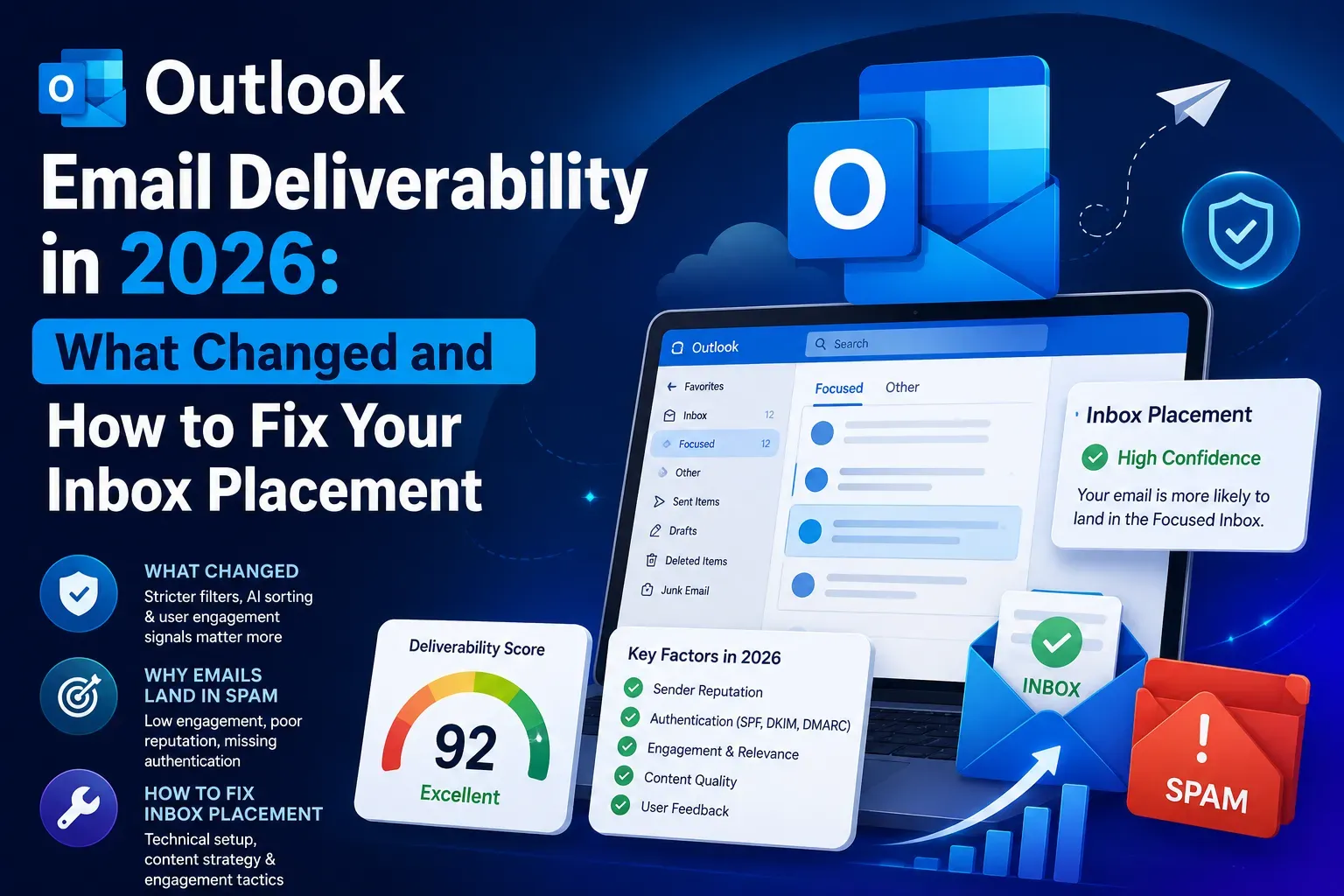
Microsoft implemented formal authentication requirements for senders delivering more than 5,000 emails daily to consumer domains in May 2025. Microsoft 365 also has recipient rate limits on outbound mail (TERRL and MERRL), but these are sending caps, not spam filters, and they do not affect inbox placement. Microsoft canceled MERRL in January 2026. According to Validity's 2025 benchmark report, Outlook's average inbox placement rate is 75.6% industry-wide, meaning nearly one in four emails from the average sender never reach the Outlook inbox. Our detailed breakdown of Outlook deliverability changes in 2026 covers what Microsoft changed and how to respond.
Yahoo and AOL Deliverability Actually Improved
Not all the news in 2026 is challenging. Yahoo, AOL, and Office365 showed notable improvement in inbox placement rates in Q2 2025, with well-authenticated senders seeing consistently strong placement. The pattern across all providers is increasingly consistent: senders who follow best practices on authentication, list hygiene, and engagement management are seeing better results year over year. Senders who do not are falling further behind. The gap between managed and unmanaged senders continues to widen.
Bulk Sender Requirements Are Now Universal
What started as Gmail and Yahoo requirements in 2024 has effectively become universal policy across major providers. SPF, DKIM, and DMARC authentication, complaint rates below 0.10%, and one-click unsubscribe functionality are now baseline expectations for any commercial sender at volume. If you are not meeting these requirements, you are not just risking spam filtering — in some cases you are facing outright rejection of your emails at the server level.
If you have not verified your authentication setup recently, run your domain through MXToolbox immediately. Our complete SPF, DKIM and DMARC setup guide explains exactly what each record should look like and how to verify it is working correctly.
AI-Written Email Still Needs a Human Edit
Many senders now use AI to draft email. Validity found no evidence that AI-generated content is more likely to be marked as spam. Filters look at content patterns, sender reputation, authentication, and engagement, whatever tool wrote the message. The real risk with AI drafts is that they tend to sound generic, and generic email gives recipients less reason to engage.
The solution is simple to state and requires discipline to execute: if you use AI to draft emails, always edit them to sound like a specific human wrote them for a specific reader. Remove generic phrasing. Add specific context. Make the email feel like it was written for one person, not generated for a segment.
Reputation Problems Are Easier to Fix Early
Sender reputation is built on your sending history, so a problem that has been building for months takes longer to repair than one caught early. That is the case for proactive monitoring: the sooner you spot a rise in complaints or a drop in engagement, the less damage you have to undo.
Our ongoing deliverability support and monitoring service exists specifically to catch these problems before they compound. Daily reputation tracking and weekly inbox placement tests give you the earliest possible warning when something starts to go wrong.
What Has Not Changed
Amid all these shifts, the fundamental principles of email deliverability remain exactly the same. Authenticate properly. Maintain a clean list. Send to people who want to hear from you. Generate positive engagement signals. Monitor your reputation proactively. Every new development in 2026 reinforces these principles rather than replacing them. The senders who have been doing these things consistently are the ones navigating 2026 most successfully.
The deliverability landscape in 2026 is more demanding than it has ever been. But for senders who do things right, it is also more rewarding — because the gap between good and bad senders has never been wider.
If you want to know exactly where your program stands against 2026 deliverability standards, a Formula Inbox email deliverability audit gives you a complete, current-state assessment with specific recommendations. Talk to our team to discuss what 2026 means for your specific email program.