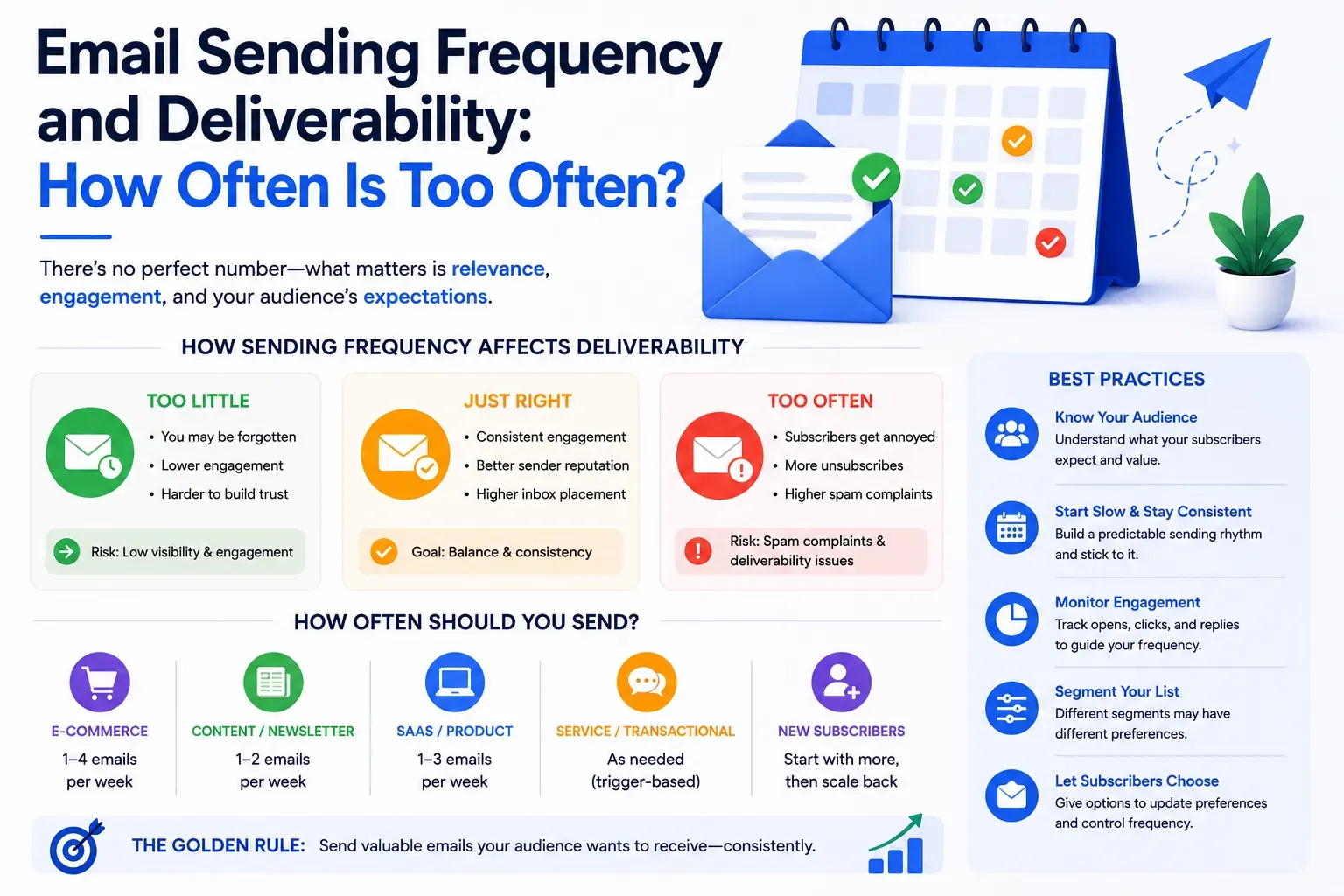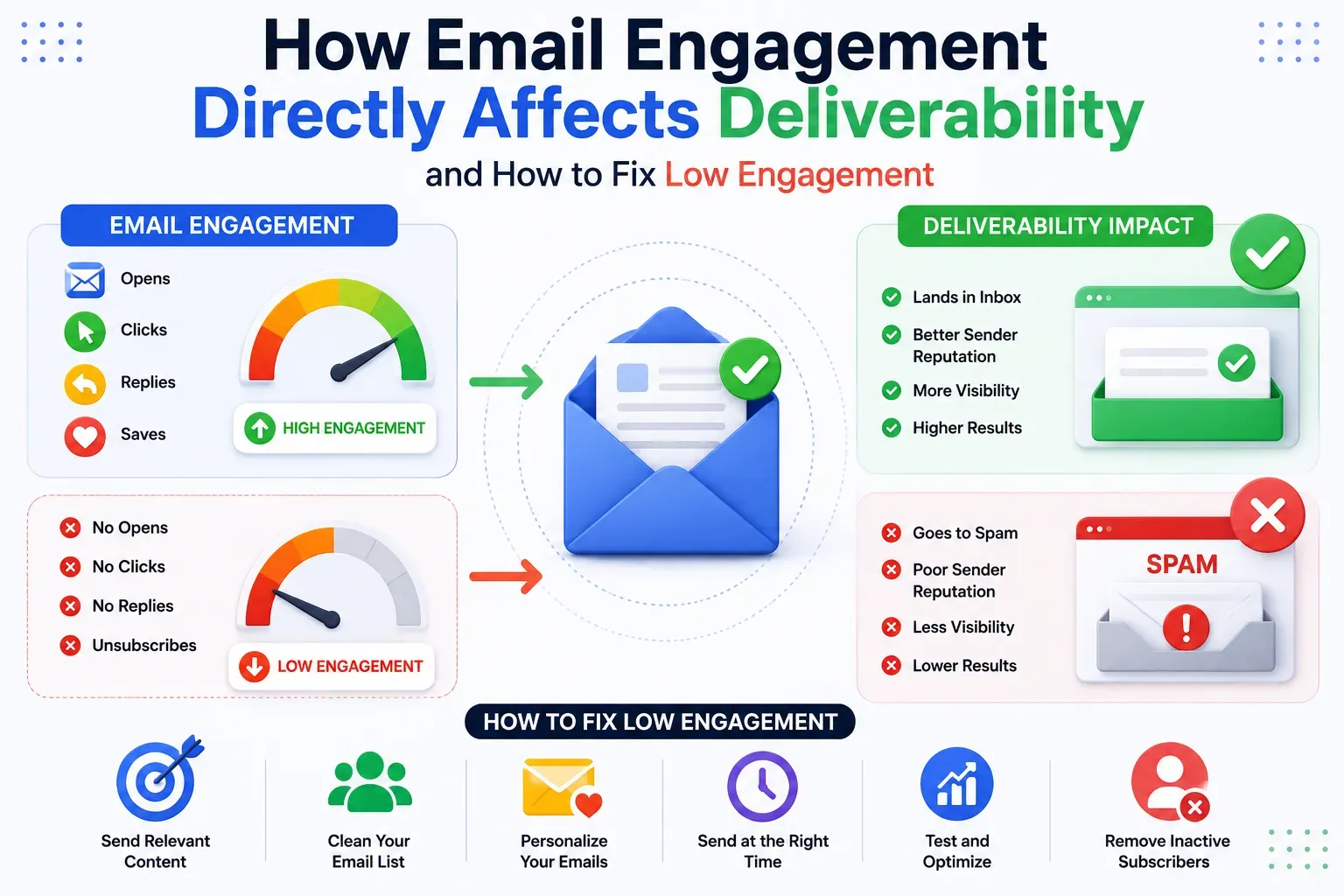
For most of email marketing's history, deliverability and engagement were treated as separate disciplines. Deliverability was an infrastructure problem — authentication, IPs, blacklists. Engagement was a content problem — subject lines, design, personalization. Fix the technical stuff and your emails reach the inbox. Then worry about whether people open them.
That separation no longer exists. Gmail, Outlook, and Yahoo now use recipient engagement as a primary input into their spam filtering decisions. Your click rates, open rates, and how people interact with your emails over time are now part of the algorithm that decides whether your next email reaches the inbox at all. This means a content and engagement problem is now also a deliverability problem — and it compounds over time in ways that can seriously damage your inbox placement even for subscribers who do want to hear from you.
In this guide we explain exactly how engagement-based filtering works, what your engagement data is telling your inbox providers about your program, and what to do about it.
How Inbox Providers Use Engagement Data
Modern spam filters maintain engagement histories for sending domains. They track what percentage of your emails recipients open, whether they click links, whether they delete without opening, whether they move your email from spam to inbox (a very strong positive signal), and whether they report your emails as spam (the strongest negative signal). These behaviors, aggregated across all of your recipients at a given inbox provider, form a real-time picture of whether your emails are wanted.
The critical insight is that this evaluation happens at the sender level, not the individual email level. If a large portion of your audience consistently ignores your emails, that pattern depresses your inbox placement for your entire sending domain — including for the engaged subscribers who do want to hear from you. Low engagement is not neutral. It actively damages deliverability for everyone on your list.
The Engagement Threshold Problem
There is no public specification for exactly what engagement rate constitutes acceptable behavior in Gmail's or Outlook's filtering models. But industry data and expert analysis consistently point to a few patterns. Programs with sustained open rates below 10% tend to see degraded inbox placement. Programs that send frequently to large unengaged segments often see a gradual, slow decline in inbox placement that accelerates over time. Programs with very high engagement among a small, active core audience tend to see strong inbox placement even when their overall list size is modest.
The implication is clear: sending to fewer, more engaged subscribers almost always produces better deliverability outcomes than maximizing list size and sending volume. This is a counterintuitive result for organizations that evaluate email programs on reach metrics rather than engagement quality metrics.
How to Identify Your Engagement Segments
The foundation of engagement-based deliverability management is segmenting your list by engagement level. Your most engaged subscribers have opened or clicked in the past 30 days. Your moderately engaged subscribers have engaged in the past 31 to 90 days. Your unengaged subscribers have not opened or clicked anything in more than 90 days. Your deeply inactive subscribers have been unresponsive for 180 days or more.
Different organizations define these windows slightly differently based on their sending frequency. A daily sender might consider 14-day recency for active engagement. A monthly newsletter sender might extend windows to 180 days for moderately engaged. The specific thresholds matter less than the principle of knowing exactly what engagement looks like across your list and using that knowledge to make informed sending decisions.
Engagement-Based Sending Strategy
Send your most important campaigns first and most frequently to your most engaged segment. These subscribers generate the positive engagement signals that protect your domain reputation for everyone else. They are your reputation builders.
Send to moderately engaged subscribers less frequently and with content that is specifically designed to re-engage them — offers, updates, or content that is more compelling than your typical send. Watch their engagement carefully. Any sustained non-response should trigger a re-engagement campaign.
Do not send to deeply inactive subscribers at all in your normal program. Instead, run quarterly re-engagement campaigns to this segment specifically — a small series of emails with a direct, compelling reason to re-engage and a clear choice between opting back in or being removed. Anyone who does not respond to a re-engagement campaign should be suppressed.
This approach may feel like shrinking your list. What it actually does is concentrate your sends on the subscribers who will generate positive engagement signals, which protects your inbox placement for your entire program — including your existing engaged subscribers.
Re-Engagement Campaigns That Actually Work
A re-engagement campaign is a deliberate, time-limited effort to reconnect with inactive subscribers before removing them. The most effective ones are short — three emails maximum — very direct in their messaging, and offer something genuinely compelling to reactivate interest. The subject lines should acknowledge the absence directly, not pretend nothing has happened.
After the re-engagement sequence, whoever did not engage should be removed from your active list without hesitation. The goal is not to guilt subscribers into opening an email. It is to identify who genuinely still wants to hear from you and to protect your reputation from the ongoing damage of sending to people who have effectively left.
Our guide on email list management and data hygiene covers the full lifecycle of list management, including when and how to run re-engagement campaigns and what to do with the results.
Monitoring Engagement as a Deliverability Signal
Set up Google Postmaster Tools if you have not already and watch your spam rate trend on a weekly basis. A rising spam rate is the earliest warning that your engagement situation is deteriorating before it becomes a inbox placement problem. Our ongoing deliverability monitoring service tracks these signals continuously and alerts you when they start moving in the wrong direction.
Every email you send to an unengaged subscriber is not just wasted. It is actively working against the deliverability of your emails to the subscribers who do want to hear from you. That is the cost of ignoring engagement data.
If your engagement rates have been declining and you are not sure whether it is affecting your inbox placement, a complimentary inbox placement test gives you a direct answer across all major providers. And if you want a complete assessment of your engagement situation and a plan to address it, Formula Inbox's team is ready to help.