

Email deliverability is the measure of how likely your emails are to reach your recipients' primary inboxes rather than their spam folders, promotions tabs, or nowhere at all. It sounds straightforward but in practice it is one of the most technically complex and misunderstood areas of digital marketing.
A lot of people confuse email delivery with email deliverability and the difference matters enormously. If you treat them as the same thing you will make decisions based on incomplete data and consistently miss the actual problems affecting your campaigns.
Email delivery means the email was accepted by the receiving mail server and did not hard bounce. It tells you the address exists and the server accepted the message. That is all it tells you.
Email deliverability goes further. It tells you where inside the receiving server that email ended up. Did it reach the primary inbox? The spam folder? The promotions tab? Or was it quietly filtered without any notification back to you?
Most email platforms report delivery rates, not deliverability rates, which is why senders often believe their campaigns are performing well when a significant portion of their emails are being silently filtered. Research consistently shows that between 14 and 17 percent of legitimate marketing emails never reach the inbox, even when they are technically delivered.
A Very Common Misconception
Your email platform showing a 99 percent delivery rate does not mean 99 percent of your emails reached the inbox. It means 99 percent were accepted by the receiving server. What happened after that is deliverability.
Step 1: Connection and Authentication Checks
The receiving mail server first checks whether your sending server is who it claims to be. It looks up your SPF record to see if your server is on the authorised list. It checks your DKIM signature to verify the message has not been tampered with. It reads your DMARC record to understand what to do if those checks fail.
Step 2: Sender Reputation Check
If authentication passes, the server looks up the reputation of your sending domain and IP address. If your domain has a history of generating spam complaints, if it appears on blacklists, or if its sending patterns look suspicious, the filter will act on that information before the email ever reaches an inbox.
Step 3: Content Analysis
Spam filters analyse the content of your email including the subject line, the body text, the links it contains, the ratio of images to text, and even the structure of your HTML. Certain patterns trigger filters even in otherwise well-maintained email programs.
Step 4: Inbox Provider Decision
Based on all of the above, the inbox provider makes a decision in milliseconds. Primary inbox, promotions tab, spam folder, or rejected outright. This decision is invisible to you unless you are actively testing or monitoring your deliverability.
Factor
SPF, DKIM, DMARC authentication
Sender reputation (domain and IP)
Spam complaint rate
Hard bounce rate
Email content and structure
Sending volume and consistency
List hygiene
How It Affects Deliverability
Missing authentication equals automatic suspicion from all major providers
Poor reputation means consistent spam filtering regardless of content
Above 0.3 percent at Gmail triggers active filtering and throttling
Above 2 percent signals poor list quality to inbox providers
Spam trigger words, image-heavy design, and broken links hurt scoring
Sudden spikes in volume look like spam attacks to inbox providers
Spam traps and invalid addresses damage reputation quickly
Difficulty to Fix
Low — one-time setup
Medium — requires sustained effort
Medium — requires list and content work
Low — remove hard bounces immediately
Low — content review and revision
Medium — requires planned volume growth
Medium — requires regular cleaning
Inbox Placement Rate
This is the most direct measure of deliverability. It tells you what percentage of your emails are landing in the inbox versus the spam folder. You need a seed list or an inbox placement testing tool to measure this. FormulaInbox offers a complimentary inbox placement test that gives you this data across major providers at no cost.
Google Postmaster Tools
If you send to Gmail addresses, Google Postmaster Tools gives you direct insight into your domain reputation, IP reputation, authentication results, and spam complaint rates as seen by Gmail. It is free and provides data that no third-party tool can replicate.
Key Email Deliverability Metrics to Track
Understanding which metrics to watch and what benchmarks to target is essential. Read our guide on the most important email deliverability metrics to know exactly what to measure and what the numbers mean.
A healthy email program typically shows inbox placement rates above 90 percent, spam complaint rates below 0.1 percent, bounce rates below 2 percent, and domain reputation rated as High in Google Postmaster Tools. FormulaInbox consistently delivers 90 percent or higher inbox placement rates for clients across industries.
Some deliverability problems are straightforward to fix. Others are more complex and require professional diagnosis. If you are experiencing persistent problems despite following best practices, FormulaInbox offers a professional email deliverability audit that covers your full sending environment and provides a prioritised plan to resolve any issues found. You can also talk to one of our deliverability experts at no charge before deciding on next steps.
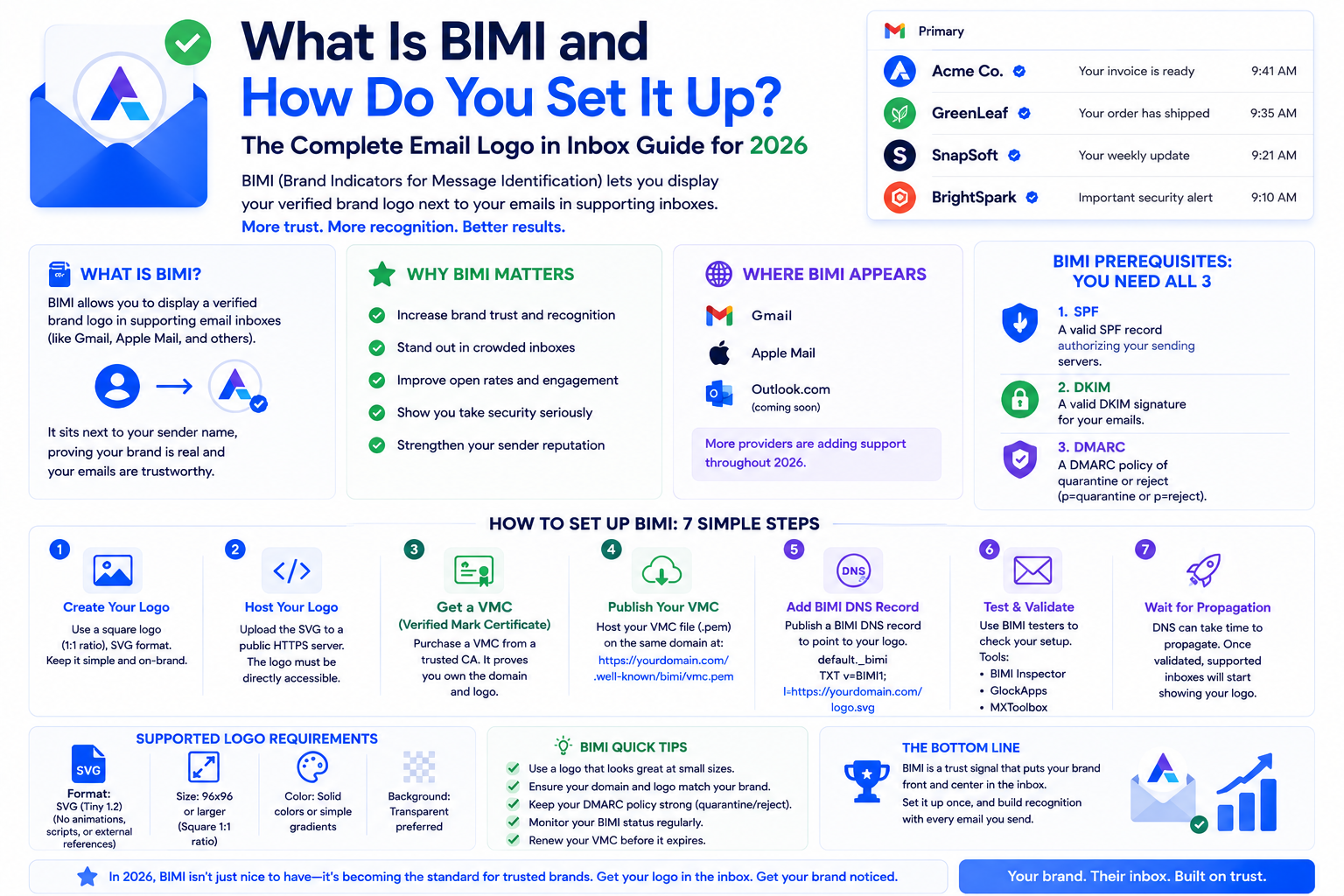
BIMI displays your brand logo next to your emails in Gmail and Yahoo — improving recognition and trust. This complete guide explains what BIMI is, how to set it

Email deliverability and email marketing are not the same thing. Understanding the difference is the first step to fixing inbox placement problems that no amoun
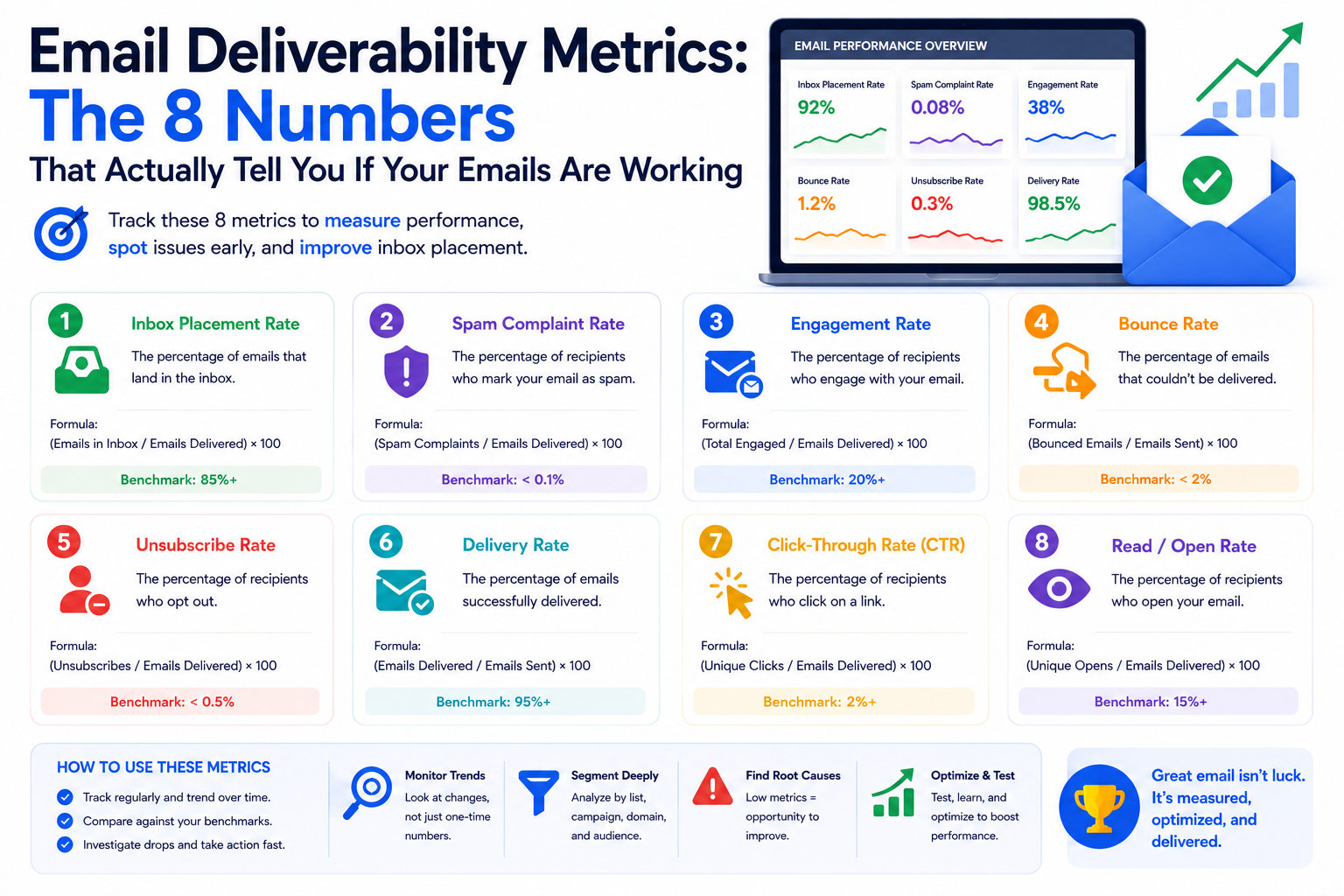
Most email marketers track the wrong metrics. These are the 8 deliverability numbers that actually reveal whether your emails are reaching the inbox — and what
Our highly experienced email deliverability managers consistently help clients achieve inbox placement rates (IPR) of more than 90% by uncovering and resolving the issues that keep messages from their intended recipients. Are you ready to do the same?