

Your email open rates have been declining for the past few months. You have tested new subject lines, tried different send times, changed your from-name, and nothing seems to move the needle. You are starting to wonder if the problem is deliverability. It might be. But it also might not be, and treating a content or strategy problem as a deliverability problem — or vice versa — will waste your time and leave the real issue unresolved.
This guide helps you diagnose what is actually driving your open rate decline, because the right fix depends entirely on the right diagnosis.
Before diving into the diagnostic process, there is an important context to establish: open rate has become a significantly less reliable metric than it used to be for measuring both engagement and deliverability. Apple's Mail Privacy Protection (MPP), which pre-fetches emails and registers them as opened regardless of whether a human actually opened them, has inflated open rates for businesses with significant Apple Mail subscribers since 2021. Gmail's Gemini AI is now also auto-opening emails to generate summaries, further distorting the metric.
This means that if your open rates are rising, it does not necessarily mean your deliverability or engagement improved. And if they are declining in an environment where MPP is active, the absolute numbers need to be interpreted with significant caution.
The metric that actually tells you whether your deliverability is healthy is your inbox placement rate — the percentage of emails that reach the primary inbox rather than spam or junk. Our guide on inbox placement rate explains how to measure this correctly using seed list testing tools.
If your deliverability is causing your open rates to decline, you will typically see certain specific patterns alongside the open rate drop. Your click-through rate will also decline in proportion to your open rate, because fewer people are seeing your emails at all. You will see the decline happening consistently across all email types — promotional, transactional, automated flows — not just specific campaigns. You may notice that contacts with certain email providers (all your Gmail subscribers, or all your Outlook users) seem less engaged, while others are fine. You may start getting NDRs or delivery failure notifications that you were not seeing before.
If these patterns are present, run an inbox placement test immediately. Tools like GlockApps or our complimentary inbox placement test will show you whether your emails are reaching the primary inbox or being filtered to spam across major providers.
If declining open rates are a content or strategy issue rather than a deliverability problem, the pattern looks different. Your click-through rates may actually be holding steady or declining less sharply than your opens — which suggests people who do open your emails are still engaging with them. The decline may be concentrated in specific campaign types or audience segments rather than across your entire program. Your inbox placement testing shows 85 to 95% of your emails reaching the primary inbox correctly.
In this case the issue is that people are seeing your emails but choosing not to open them. This is a subject line, relevance, frequency, or audience-fit problem — not a technical deliverability problem. The fixes are fundamentally different.
If your diagnosis points to a deliverability root cause, the most common specific causes are a gradual decline in your domain reputation — often caused by sending to an increasingly unengaged list over many months, a recent change in your sending infrastructure that affected authentication or IP reputation, or a spike in complaint rates from a specific campaign that damaged your reputation and has not fully recovered.
Our guide on email sender reputation explains how to check your current reputation status and what steps are required to rebuild it. A comprehensive email deliverability audit provides the most complete picture of what is causing the decline.
There is a specific scenario worth addressing separately because it is affecting many senders in 2026: if your open rates appear to be stable or even rising while your click-through rates and revenue from email are declining simultaneously, you are likely experiencing the impact of AI-driven open rate inflation. Gmail's Gemini AI auto-opens emails for summary generation. Apple MPP pre-fetches emails before humans see them. Both behaviors register as opens in your analytics without representing genuine human engagement.
This is not a deliverability problem in the traditional sense — your emails may be reaching the inbox just fine. The problem is that the AI is consuming the value of your email before your recipient does. The solution is to write emails that provide clear value beyond what a brief AI summary can convey — detailed stories, interactive elements, specific offers that require clicking through to claim.
If the problem is deliverability: audit your authentication setup, check your domain reputation in Google Postmaster Tools and Microsoft SNDS, clean your list of unengaged contacts, and address any blacklist listings. Run inbox placement tests to confirm improvement after each change.
If the problem is content or strategy: test new subject line approaches, review your sending frequency, segment your audience more specifically, and improve the relevance of your content to each segment. Track click-through rates and downstream conversions as your primary success metrics rather than open rates.
If the problem is AI open rate inflation masking real engagement decline: shift your optimization focus entirely to click-through rates, reply rates, and revenue attribution. These metrics reflect genuine human engagement that AI cannot fake.
Diagnosing the right problem is more valuable than having ten solutions. Fix the wrong thing and the real issue keeps getting worse while you think you are making progress.
If you are not certain whether your declining open rates reflect a deliverability problem or something else, a Formula Inbox email deliverability audit gives you a definitive answer. We check your inbox placement across all major providers, review your authentication and reputation, and tell you exactly what is driving your metrics — so you can fix the right thing.
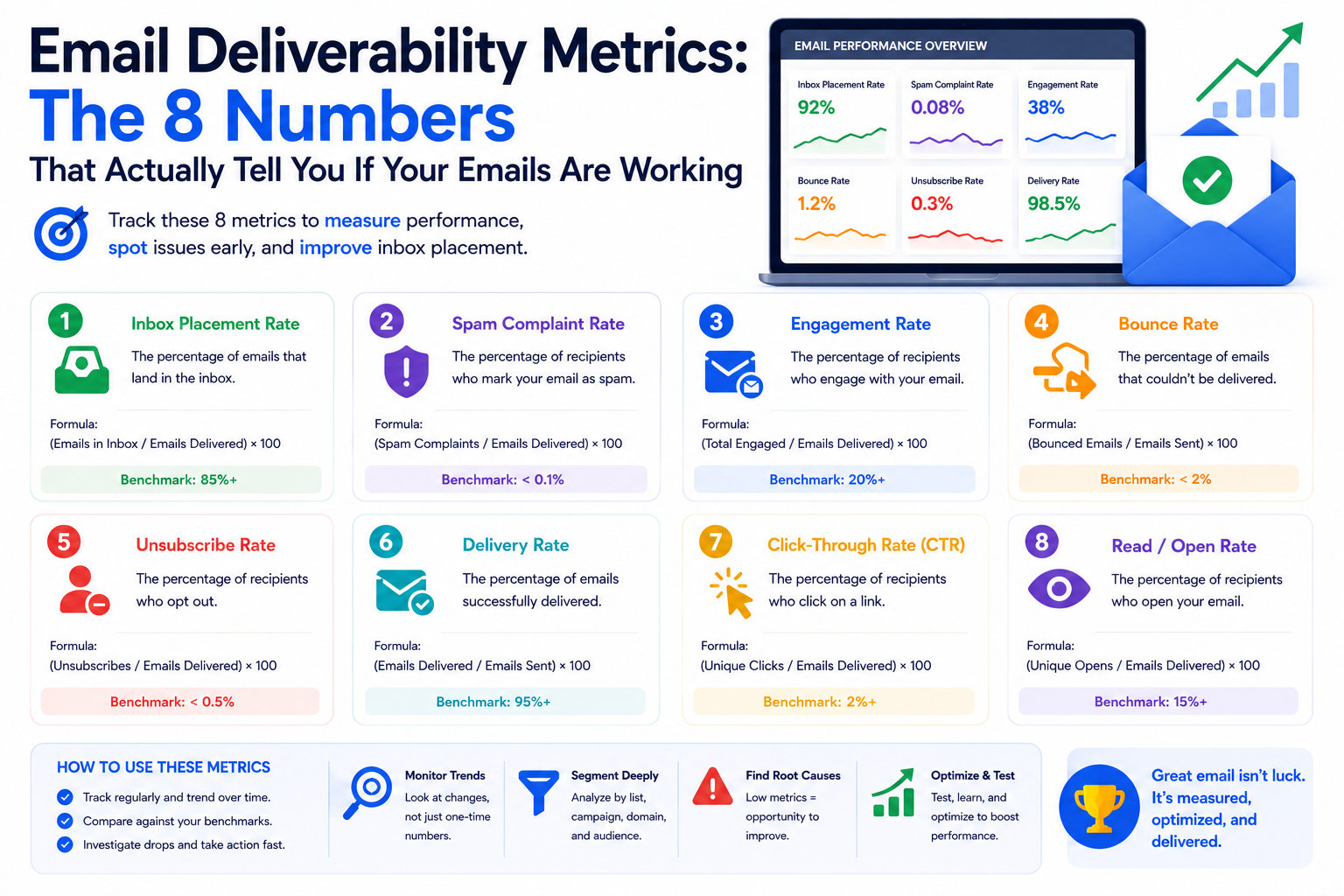
Most email marketers track the wrong metrics. These are the 8 deliverability numbers that actually reveal whether your emails are reaching the inbox — and what
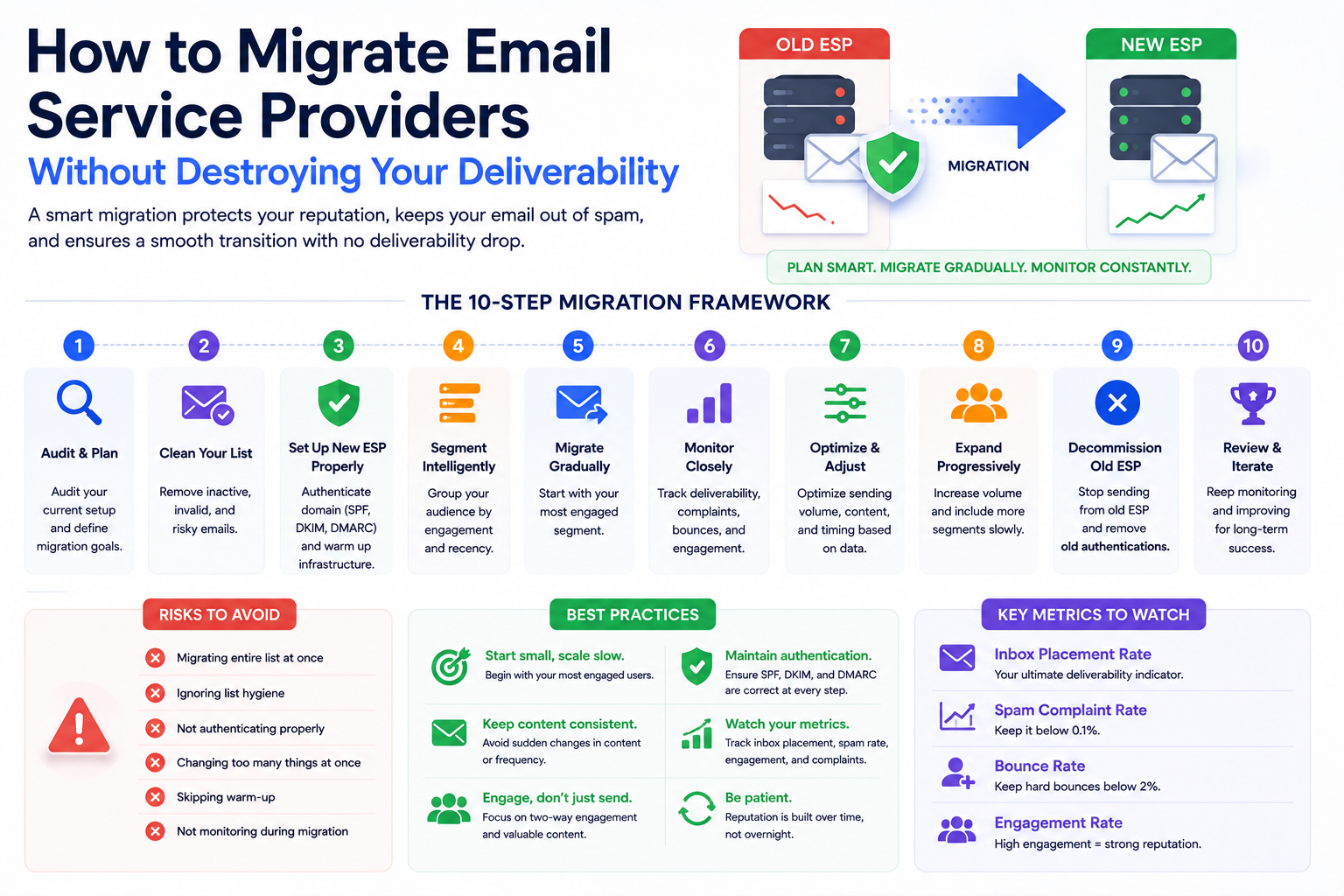
Switching email platforms is a high-risk deliverability event. This guide shows you exactly how to migrate your ESP safely, protect your sender reputation, and
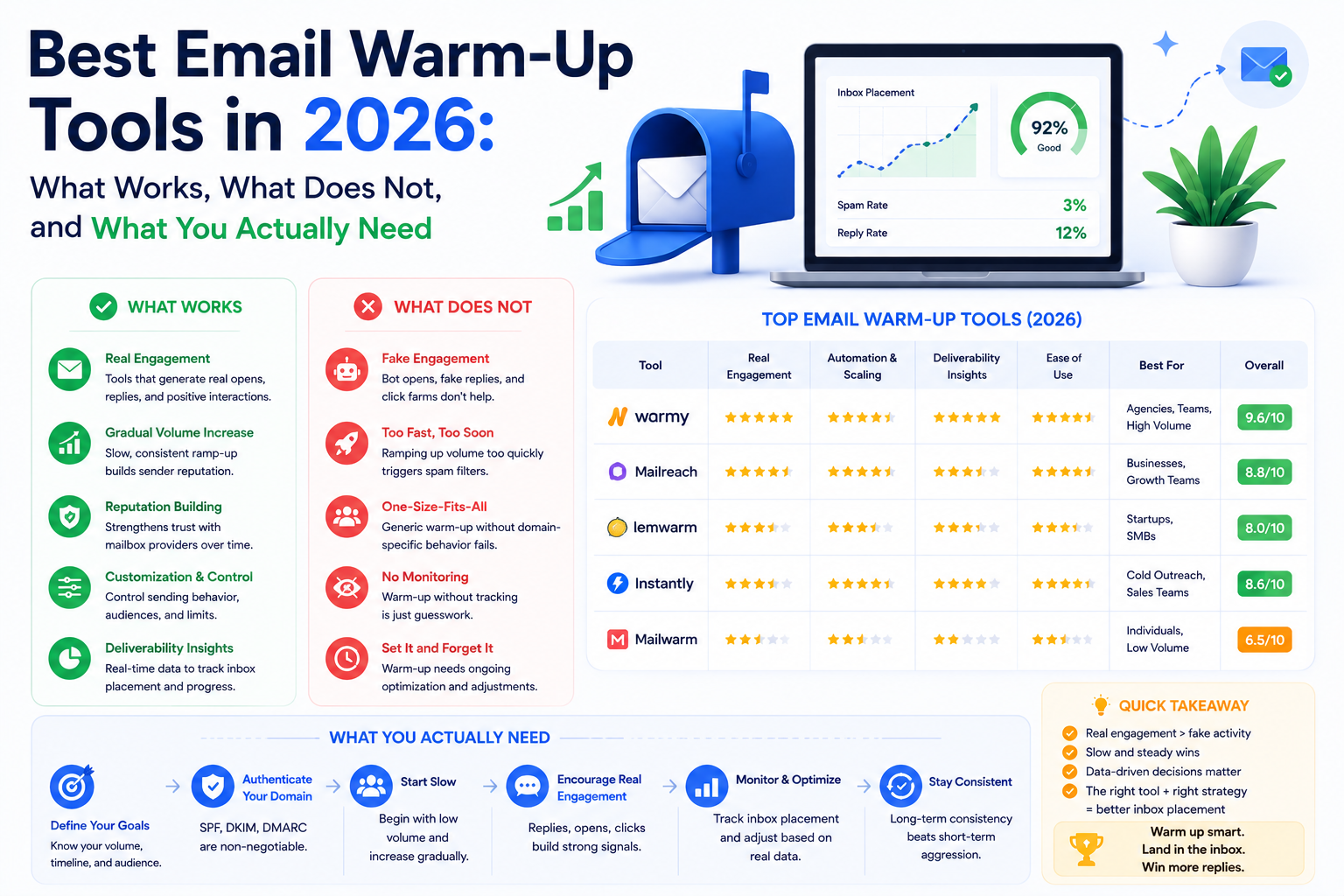
Thinking of using an email warm-up tool? This guide reviews how automated warm-up tools work, what they can and cannot do, and whether you actually need one for
Our highly experienced email deliverability managers consistently help clients achieve inbox placement rates (IPR) of more than 90% by uncovering and resolving the issues that keep messages from their intended recipients. Are you ready to do the same?